Picture
As I get more acquainted with food systems, the more I get tangled in all the regulations and status symbols that come along with it...USDA this, certified that. And in the case of Certified Organic, it would seem like the end all be all. For many farmers it is another costly expense. For others, they don't want the government in their business and feel they are beyond organic in many cases. The question is..."If you are a farmer, is organic the only way to bring your food to market and have it be accepted?"

I recently wrote about this subject for my good friends over at Handpicked Nation. claiming that "knowing your farmer’s" methods can sometimes be the best ‘organic certification’ of all. Here is an excerpt from the article...

Nowadays, we need a logo, certification or stamp of approval to validate pretty much everything we buy. But why?  Certifications provide assurance that someone is representing the consumer, holding producers to a set of standards. We need representation because we have become disconnected or removed from pretty much every consumer good we buy. 150 years ago, most of what we needed came from within 25 miles. We knew our butcher, bookbinder, tailor, farmer, tool maker, etc. You didn’t need certifications because you knew who made what you were buying. You approved the producer yourself. Click here for the whole story...


Picture
I've had this blog for almost two years and this is the longest lag in posts I have ever had. Getting a non-profit off the ground takes 24/7 leaving little time for much else. But not posting has definitely put me out of balance and I want to reestablish that equilibrium so hopefully the posts will become weekly again. I miss it!

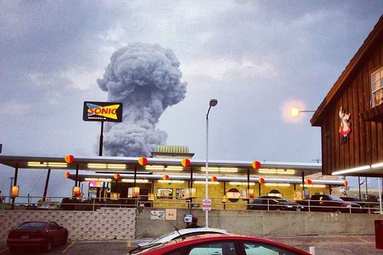
My go to site for relevant e-news, Grist.org, has saved me this week, however. Below is a re-post from today's issue. It is a topic I thought blogging about in the aftermath of the West, Texas fertilizer plant explosion..."Should the explosion make us wonder...why do we need synthetic ag chemicals anyway?"

I refrained because I realized that if it isn't a fertilizer plant it could be any variety of other manufacturing plants which deal with explosive chemicals. We are as addicted to chemicals as we are oil. But Grist took a stab at this topic of conversation and I commend them. Check it out and open up a discussion: If conventional agriculture is an "elephant in the room" then the explosion was it's roar! It's saying..."Notice me! I need to be changed!" And I'm not talking about changing a diaper. I'm talking about changing the food system!


Picture
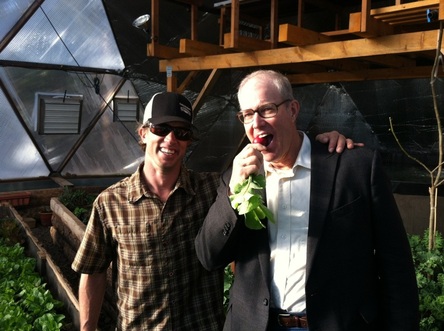
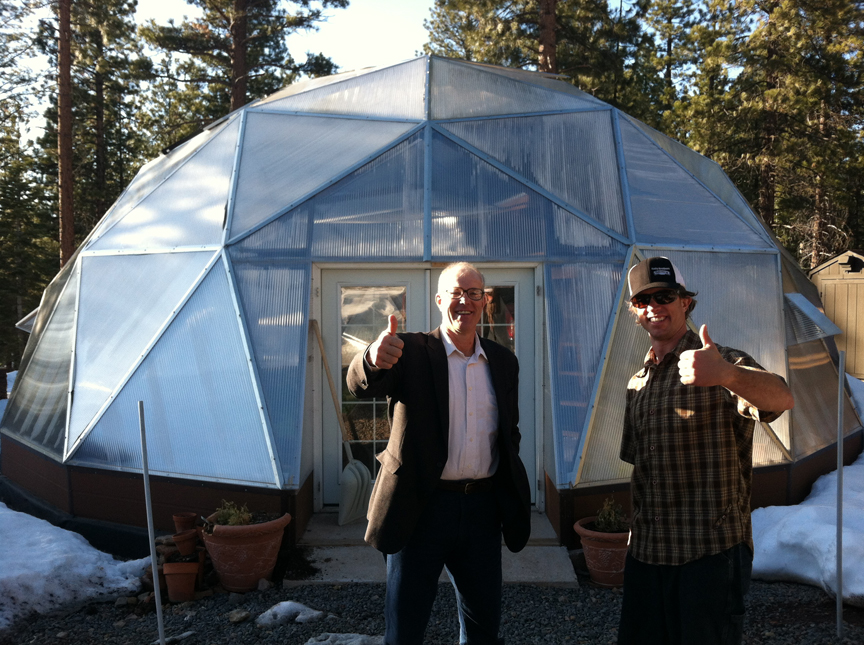
Bill Kelly w/ Joel Salatin inside the Growing Dome at the Truckee Community Farm.
Last month, the Tahoe Food Hub had the fortune of co-hosting a lecture with the famed farmer, Joel Salatin. Joel was featured in Michael Pollan's book, Omnivore's Dilemma and in documentaries like FRESH and Food, Inc. Joel came to North Lake Tahoe as part of Squaw Valley Institute's "Uncommon Speaker Series."

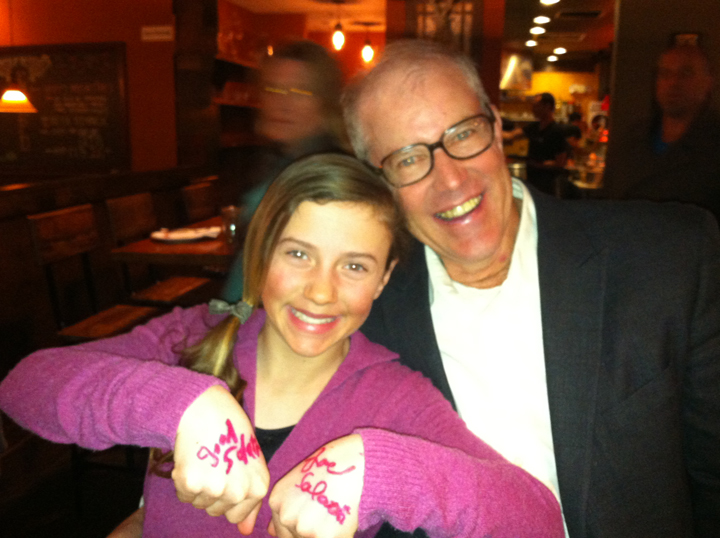
Prior to his evening lecture to a SOLD-OUT crowd of 500 people, the Tahoe Food Hub held its first fundraiser with a lunch for 40 people at PlumpJack Cafe in Squaw Valley. I had the honor of getting to introduce Joel. Most everyone in attendance was familiar with Joel's efforts to help people think more clearly about our food system. So a formal introduction was not really necessary. But as I told our guests, "I will probably never going to get a chance like this again to introduce Mr. Salatin so I was going for it." I was pretty happy with how it turned out and thought I would share an excerpt below...

"Joel Salatin is a 3rd generation farmer and self-proclaimed grass farmer meaning Joel works with his livestock, or teammates as he calls them, to build healthy soil which grows nutrient rich grass which feeds the animals. Its the cultivating of the grass which drives the whole orchestra.

Joel hails from Polyface Farms outside Charlottesville, VA in the Shenandoah Valley. Joel is known as much for his sustainable farming practices as his unique mastery of the English language that has captured the ears, minds and hearts of America. When Joel speaks, it's almost like Spoken Word, language-based performance art. He blends honesty & humor for a common sense approach to understanding our agricultural industry and food system. Because Joel realizes that when we are smiling and happy, we are more prone to listen allowing the words to seep deeper and take root. His back porch style breeds an environment of cooperation and collaboration helping unlikely allies realize we all basically want the same thing...a healthy future for our children and our children's children's children! So how are we going to get there? Well Joel is here to tell us how. Please join me in welcoming...Joel Salatin!" (applause)


Joel quotes:
1. "It's all a symbiotic, multi-speciated synergistic relationship-dense production model that yields far more per acre than industrial models. And it's all aromatically and aesthetically romantic."
2. "Plants and animals should be provided habitat that allows them to express their physiological distinctiveness. Respecting and honoring the pigness of the pig and the chickenness of the chicken is the foundation for societal health."


Picture
Photo courtesy of Daphne Hougard
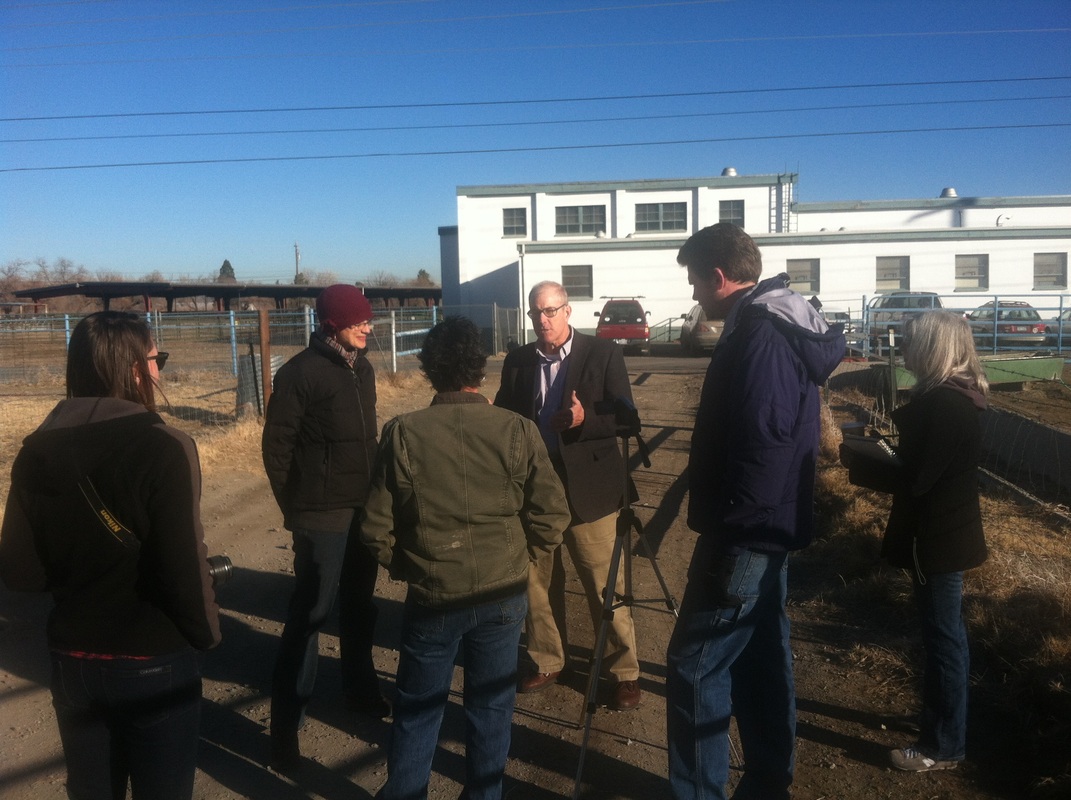
The story of the Tahoe Food Hub has a lot of moving parts and can be hard to capture in a press interview but Laura Brown with the "The Union" in Nevada City/Grass Valley, CA nailed it! We so appreciate her thoughtful reporting and comprehensive coverage of who we are and what we want to do. Below is an excerpt but for the full story, click here.

An emerging nonprofit group called the Tahoe Food Hub is reaching out to foothill farmers in Western Nevada County in an effort to supply restaurants and natural food stores in the Truckee-Tahoe region with fresh, locally grown produce.

If done well, the project has the potential to reduce the headache of marketing and distribution while securing a steady stream of revenue for local agriculture, say some local farmers.  A food hub aggregates food from regional producers, stores it, markets it and distributes it within a local area, according to the Tahoe Food Hub’s website.

“We’re mirroring a national food system but doing it on a regional level,” said Susie Sutphin, co-executive director of the Tahoe Food Hub.

Food hubs help small-scale producers find new markets, provide local communities with healthy, ecologically grown food and educates consumers about the importance of sustainable agriculture and the positive ripple effect of buying local. Read the whole story here...


Picture
Photo courtesy of Daphne Hougard
Recently, I've been playing with a soapbox idea about the misunderstanding behind the meaning of CSA. And for good reason...Just the other day, I saw a poster where a farmer was promoting their CSA program but no where on the poster did it explain what CSA meant or stood for.

Why? Because most people associate CSA with meaning "the delivery of a weekly box of vegetables" where a person pays in advance to share in a farmer's risk and celebration of that season's harvest.

But...CSA stands for "Community Supported Agriculture" which is a lot richer and goes lot deeper than just a  vegetable subscription. I'm not knocking veggie box programs and farmers' markets. They are responsible for the sustainble, food movement in this country but its time to take it to the next level and truly support our local agriculture by providing small-scale farms with a variety of distribution models beyond direct-to-consumer but to wholesale markets like restaurants, grocery stores, schools and hospitals. The whole purpose of the food movement is to get regionally produced, ecologically grown food to more people. To do that we have to make it available. Veggie boxes don't work for everyone and farmers' markets are only one day a week. The answer is not more farmers' markets. Farmer's markets require a lot of a farmer's time and money. And only 5% of people shop at farmers' markets. We need to get good food in more places everyday! By opening up wholesale markets to farmers and ranchers, we start to build a regional food system and we  rely on what's available within 100-150 miles. Small farms can't compete on price and volume in a national food system but they can compete on a regional level. It creates new opportunity for them, more healthy food for us and money circulates locally for stronger, more resilient economies.

...That was meant to be an introduction for an article I wrote about how veggie box programs kick-started the food movement. It just hit newsstands in the recent issue of edible Reno-Tahoe. Read the article, "Behind the Box" by clicking here. When I was writing the article, it got me thinking about this misunderstanding of CSA's. I've developing this theory "behind CSA's" ever since. And I've realized that the essence of "Community Supported Agriculture" is building a regional food system. Similar to what we are doing at the Tahoe Food Hub. The introduction above is really the third development of this theory. The second draft appeared on the food blog Handpicked Nation on January 3rd.


Picture
Drawing by: Jana Vanderhaar w/ verdantconnections.com
Picture
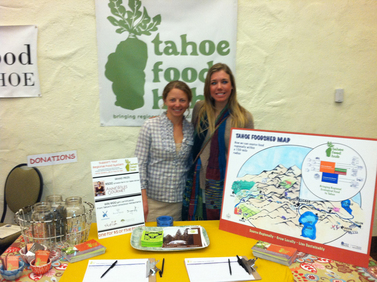
Tahoe Food Hub interns: Taylor Wood & Jaynie Miller
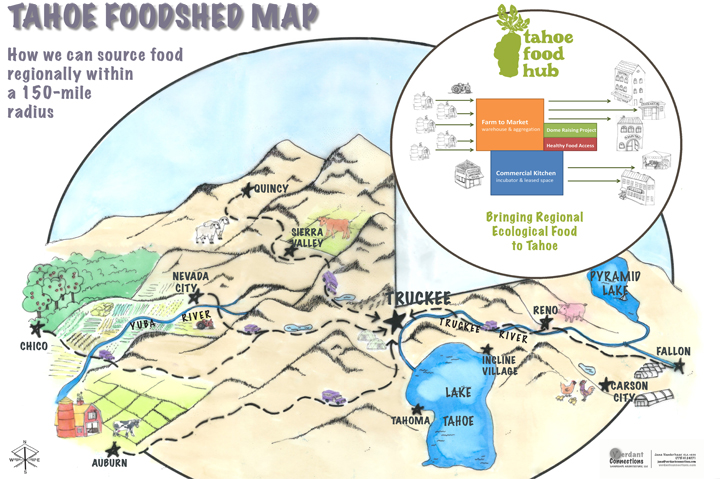
Last week,the Tahoe Food Hub tabled at its first event giving deadline for our first banner, stickers and promo materials including the lovely foodshed map featured above.

The drawing is definitely Richard Scarry inspired. In fact, some of the buildings are actual structures found in the books. Like many, Richard Scarry drawings captured my attention for hours as a kid teaching me about how the world works and interacts. And when looking for the best way to help conceptualize the Tahoe Foodshed, I knew exactly where to turn.

A foodshed is often compared to a watershed because they usually share the same footprint....food grows where water flows! A watershed represents where a community gets its water. Likewise, a foodshed represents the local area where a community sources its food.  In the map, you'll see how the Truckee and Yuba Rivers lead Tahoe to its regional food sources. Key components of a foodshed include productive farmland, food distribution, waste disposal, processing facilities as well as food wholesalers and retailers. For non-food producing areas like North Lake Tahoe, a foodshed creates partnerships with food abundant neighbors who grow food year-round within 150-miles.

The goal of the map is to visually represent the role of the Tahoe Food Hub by putting it in relation to its foodshed. The map distills the efforts of a formal foodshed assessment which compares the food needs of a community with its food production capabilities. Foodshed assessments also display the social, economic and environmental benefits of consuming food within that foodshed. A foodshed assessment for North Lake Tahoe evaluates the potential to feed the North Lake Tahoe area from ecological growers within a 150-mile range of Truckee, CA both stimulating the economies of surrounding communities and increasing Tahoe’s food security and access to healthier, sustainably-grown food.

If every community evaluated the bio-capacity of its foodshed to source as much food regionally and rely less on the national food system...we would increase food security, create more equitable food policy, and see the benefits that sustainable farming methods can have on our health, economy and environment. We don't have to be so far removed from our food. Understanding our foodshed brings us closer so we can make better decisions about where our food comes from so we can still have our coffee and chocolate but without trucking things like eggs, milk and greens which can be produced locally year-round. Feed the world one community at a time! 


Picture
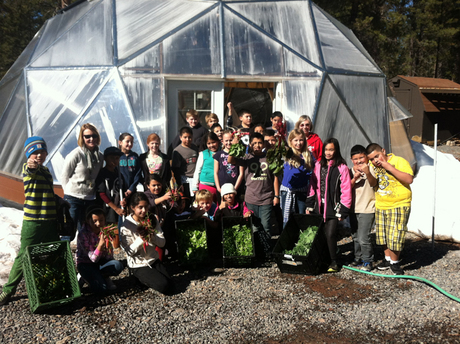
Candy Belsse's 5th Grade Class - Truckee Elementary
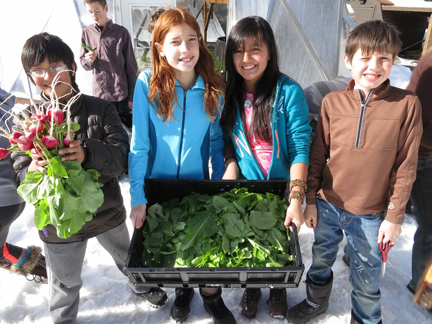
It might be a little corny, but Whitney Houston pretty much hit it spot on, "Children are our future!" And in keeping with the kids theme of the past few weeks, I wanted to share some pictures from two, recent, kid-driven harvests at the Truckee Community Farm.

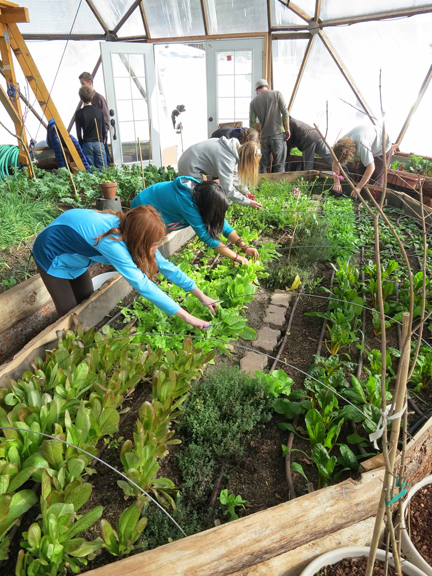
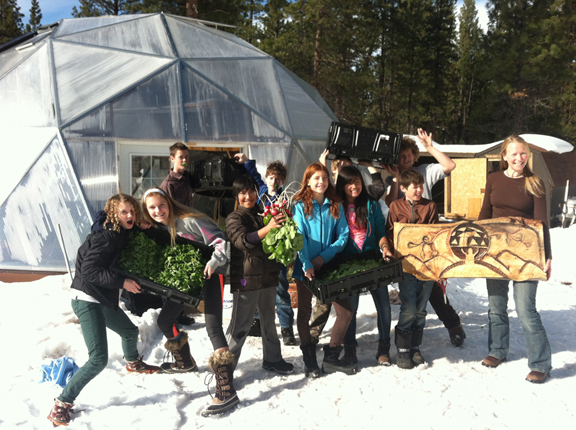
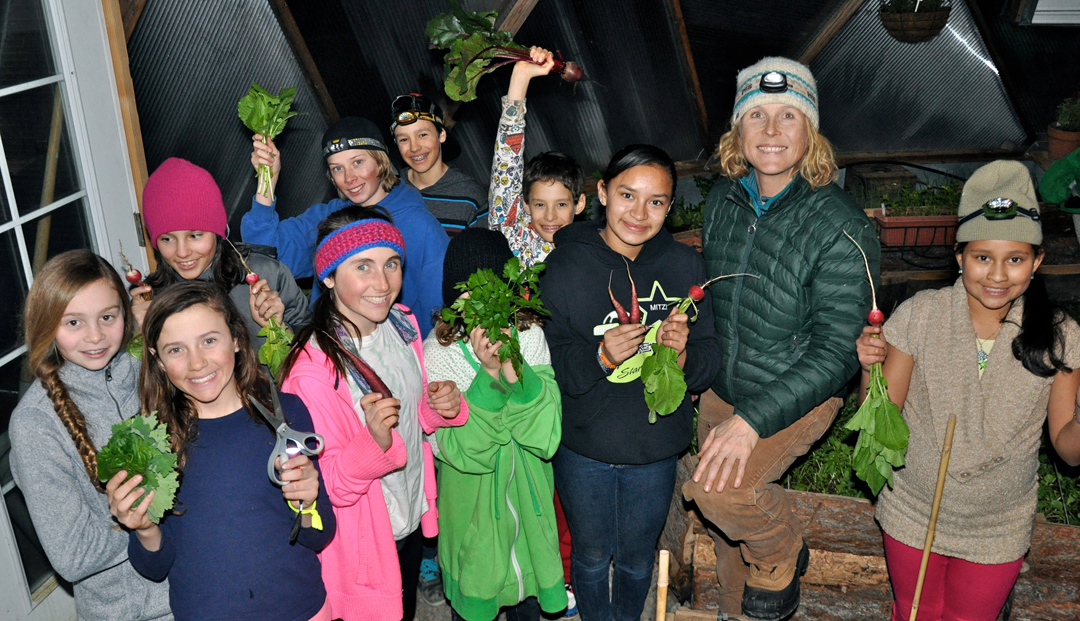
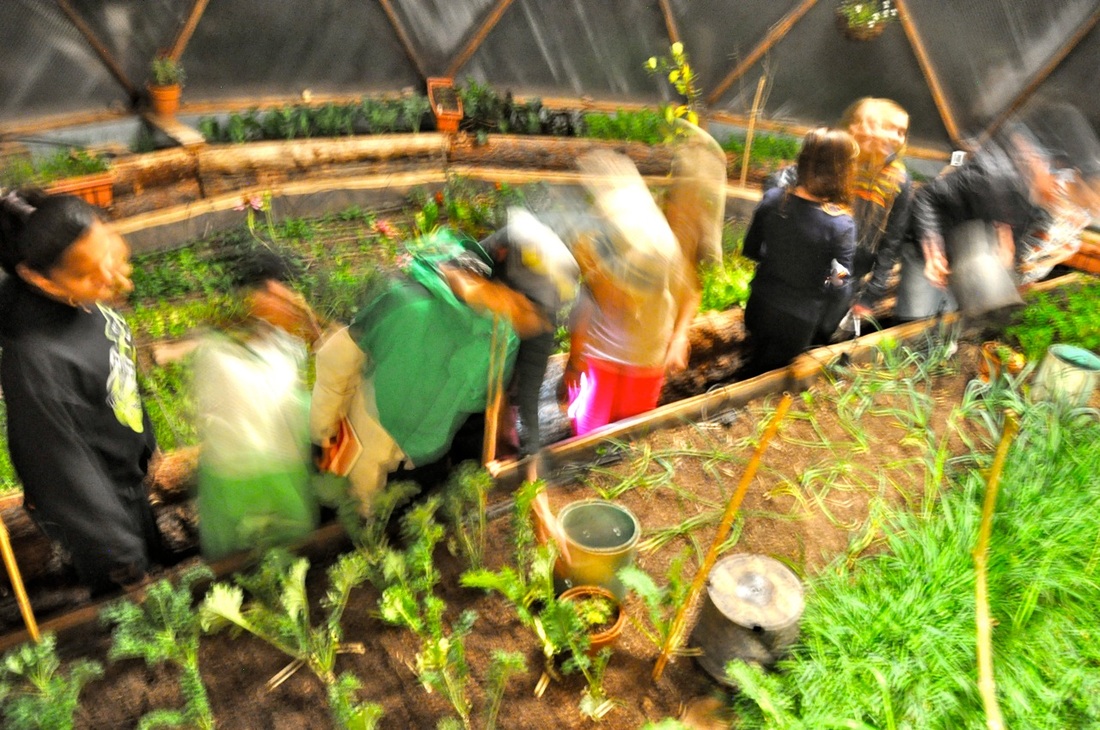
Last Friday, twenty-five 5th graders from Truckee Elementary came out to the Growing Dome and in the matter of one hour harvested, weighed, washed and packed 16lbs of greens and rooted vegetables. About 8lbs will be used to make a soup for a cafeteria meal. But the kids got a special surprise for the weekend when they learned they would each be taking home a bag of lettuce greens to share with their families.

Three weeks before that, students from Tahoe Expeditionary Academy in Kings Beach came to do a harvest helping us prepare a food donation for Project Mana, our local hunger relief agency. Not only did the kids harvest 8lbs of veggies but they got to deliver the food to Project Mana taking their field trip to a whole other dimension and demonstrating the connection we all share with food. Check out the video and photo gallery below.


Picture
Guest blogger, chef and rad skier...Cody LaPlante
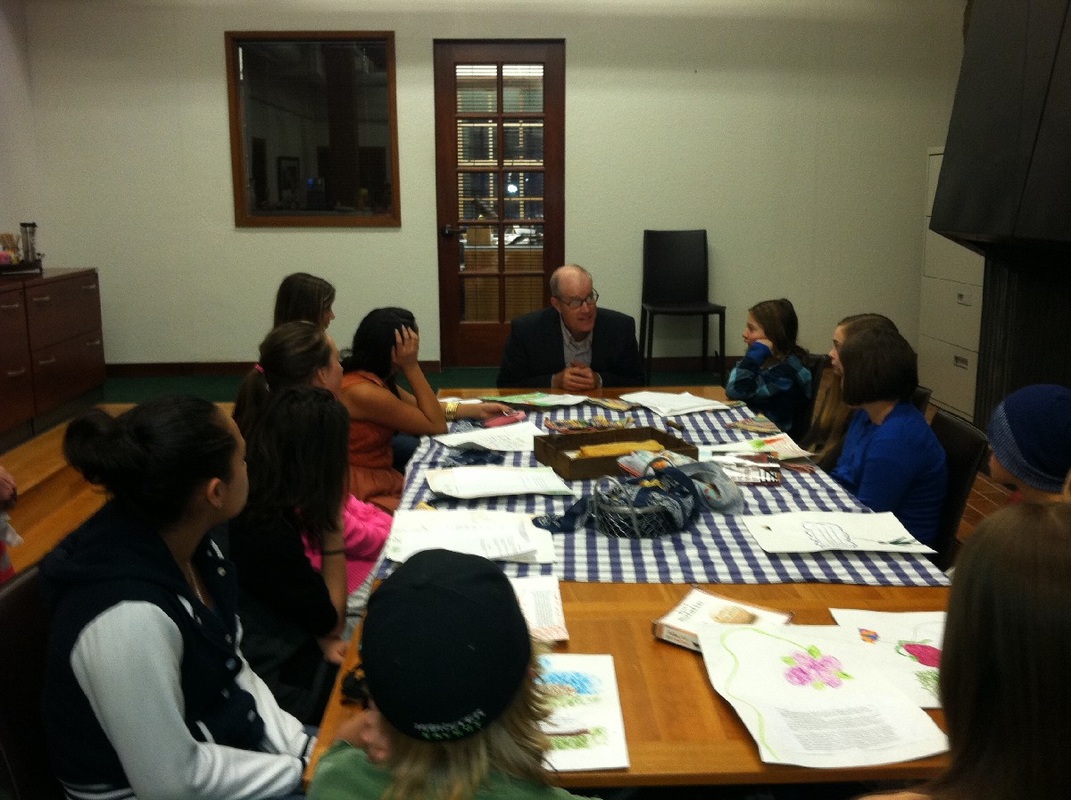
Something I haven't done yet at Food Chronicles is have a guest blogger. Pretty standard stuff for most blogs. Guess I was waiting for just the right contributor! Wait no longer. I would like to introduce my first guest, Cody LaPlante. Cody is 11yrs. old and a great storyteller.

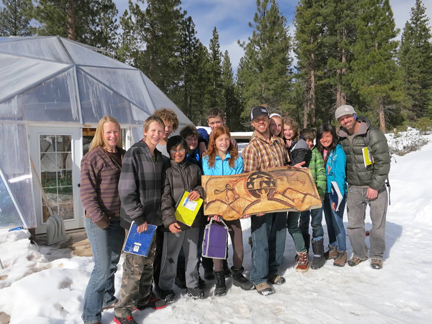
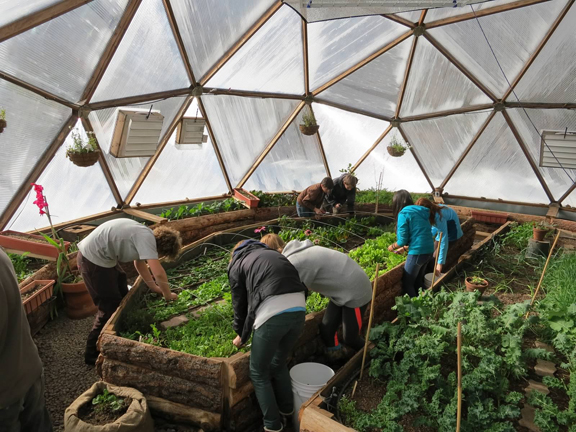
Cody is a member of the Squaw Valley Institute Kid's Club. The club came out to the Growing Dome for an evening tour to learn about the dome and discover cool things about 4-season growing. Everyone got to help Cody harvest veggies that he later used in a seasonal meal prepared for his family. BIG thanks to Carolyn Hamilton who organizes this talented and motivated bunch of kids who are developing a better connection to their food in anticipation of Joel Salatin's visit on Feb. 13th. Here's Cody...

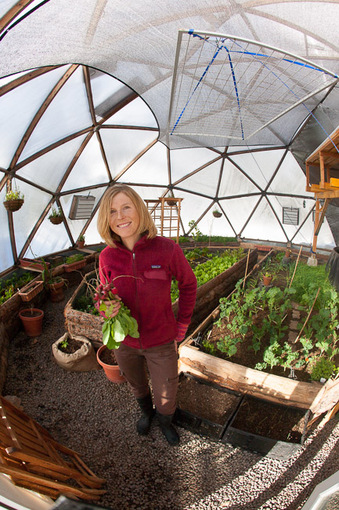
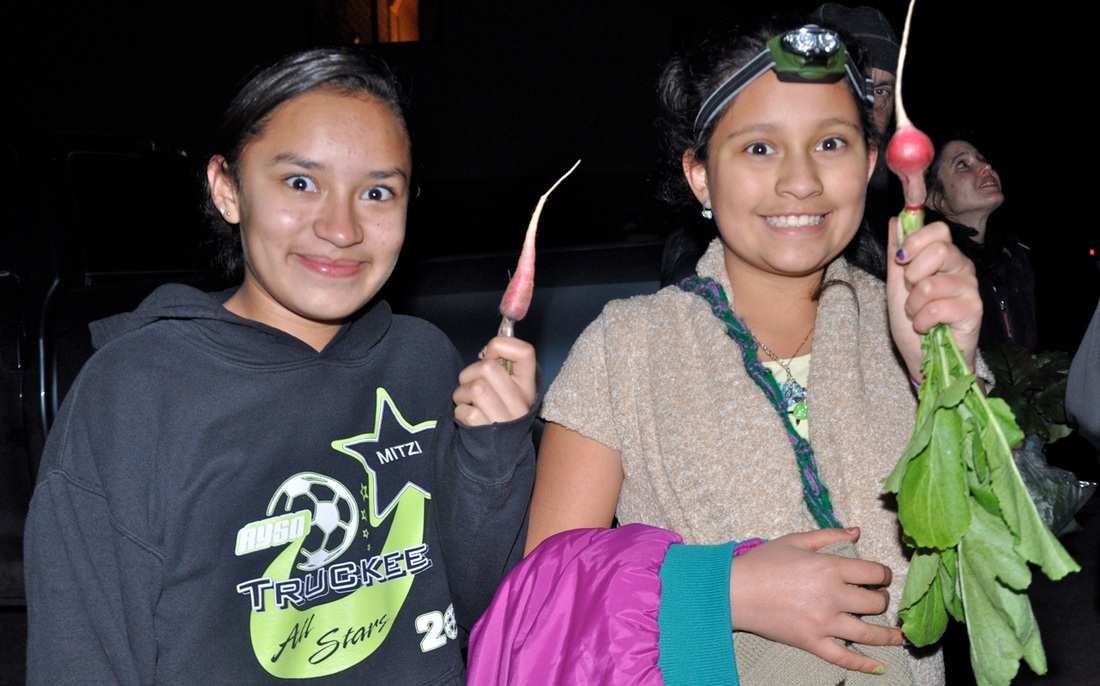
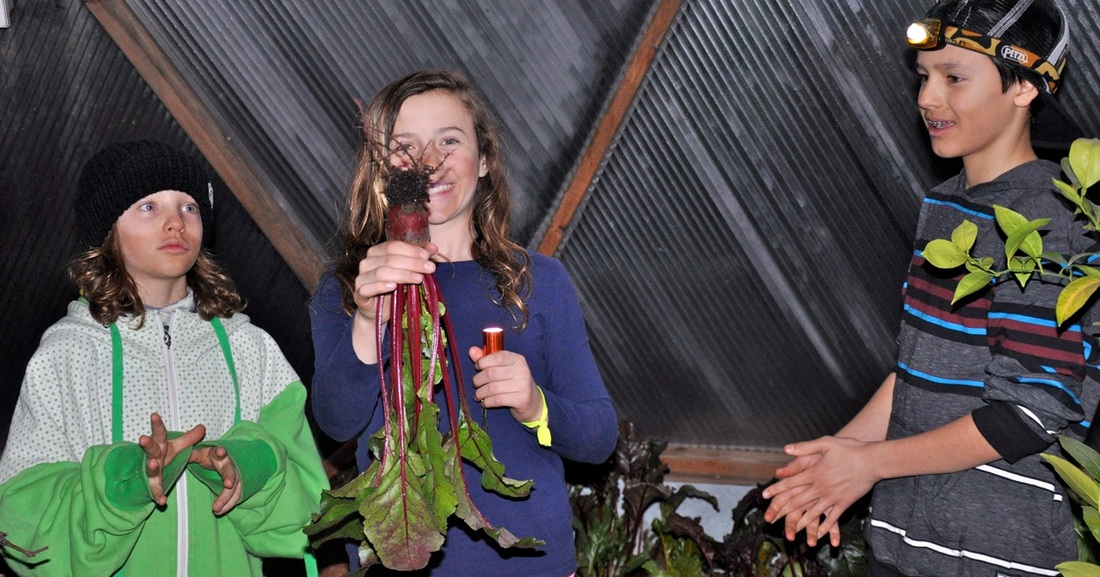
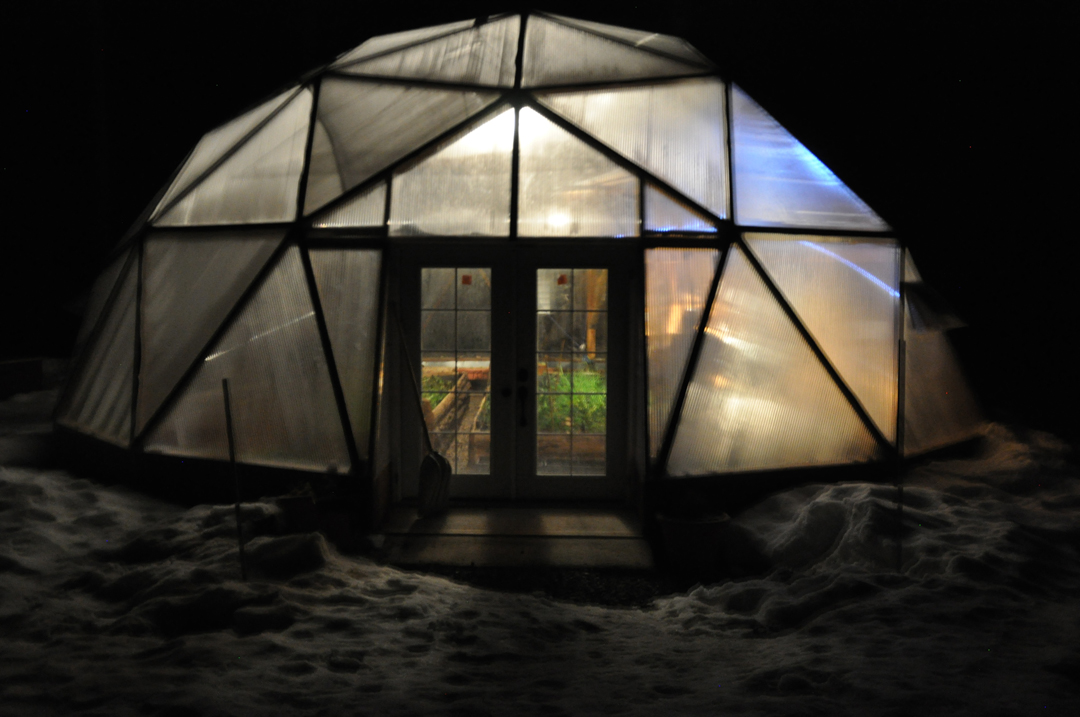
One time my class went to the Growing Dome in Truckee. It was full of vegetables and frogs. I saw a water tank with fish and asked what if was for. Susie said that the fish poop fertilizes the plants in a system called aquaponics. The Dome has solar panels to power the water tank's pump and fans to circulate air. When it gets hot in the Dome the wax on the cooling vents melts and opens the vents so cool air can come in. When the dome starts to cool down the wax hardens and closes the vents. That's cool!  At the Dome we harvested parsley, chard, carrots, one beat, radishes, and spinach leaves.

Picture
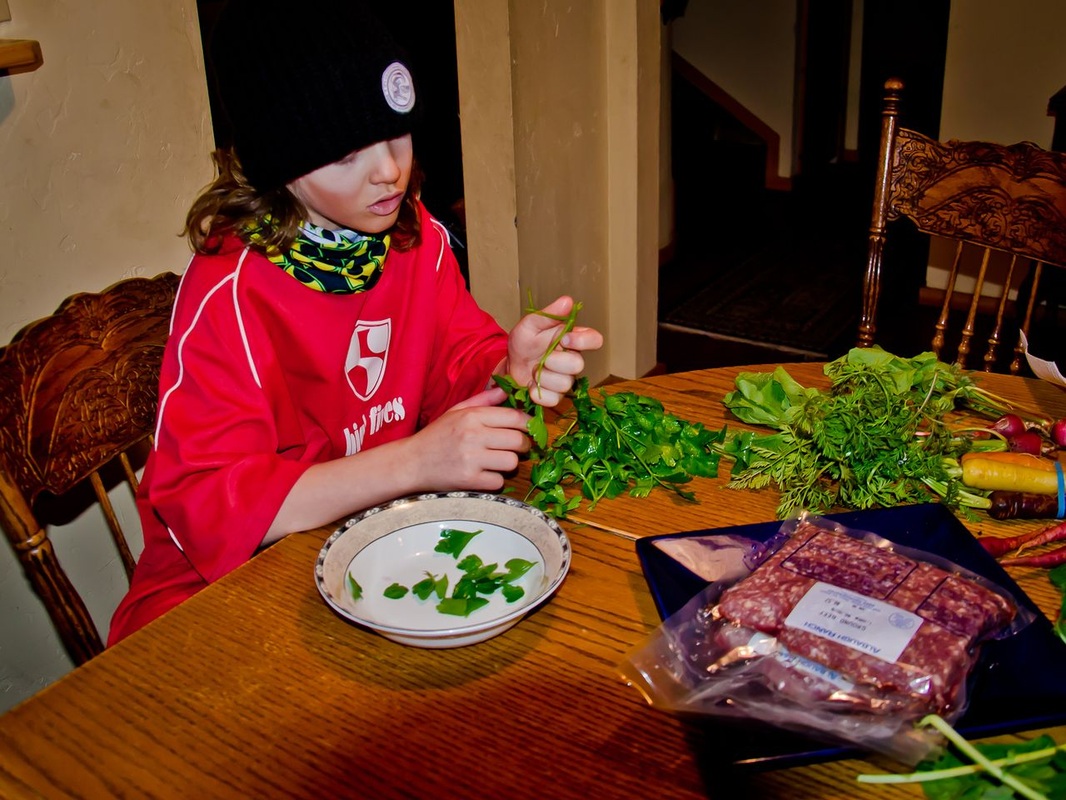
Great Basin Community Food Cooperative in Reno is a little market that only sells local, organic foods from farmers around our area. There we got some cabbage and ground beef. The meat was all grass fed from Albaugh Farms in Fallon, Nevada. I visited this farm last fall and we got to see all the cows, sheep, goats, and chickens, and we got to play on the tree swing. The cabbage was from Riverdog Farms in California.

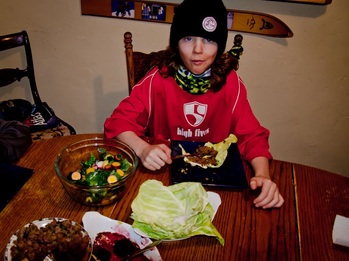
After the LONG process of getting all the food I finally got to make my meal. We made a salad with chard, beat leaves, carrots, and radishes. My favorite part of the salad was the beat leaves! We boiled the beat and sliced it up and put a little vinegar on it. It was really sweet! We added parsley, salt, pepper, and honey from beehives in Sparks, Nevada to the ground beef. Then we cooked it up and made cabbage wraps. It was so good we had it for lunch the next day.

                - Cody LaPlante, 11yrs. old - Truckee, CA


Picture
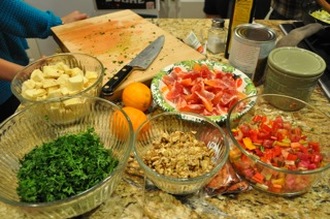
One complaint about organics is that it too expensive. I'm not so sure about that...I just made an awesome organic, meal for six people under $35! I'm calling it, sweet potato wrapped chard enchiladas. And was accompanied by a lovely, green salad with slices of blood oranges. I made the dish last Friday after first having it the day before on Thursday. That's how much I loved it...I had to taste it again. and quick! It was that good!
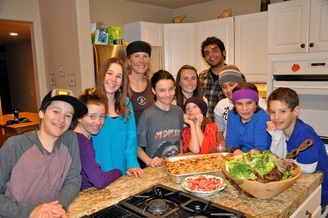
When I handed the clerk my credit card to pay for the ingredients, I thought to myself, "A family of six probably couldn't get out of McDonald's for much cheaper at $5/person." Not only is it price comparable but it is healthier, organic and made in a kitchen hopefully with family and friends laughing and talking as the meal gets assembled. That's exactly what happened on both of my recent cooking occasions. The first occasion was with a group of kids who were learning about one of the fundamental principles to having a sustainable food system...eating seasonally and as locally as possible. The second occasion was with a group of friends that i wanted to share this culinary delight.

Picture
The kids, were the real inspiration! They are part of a program which studies the monthly lecturers hosted by the Squaw Valley Institute. The next speaker is farmer, Joel Salatin! One of Joel's suggestions for re-normalizing society...is to get our hands on our food coming together in community to tell the story of our food and make a wonderful meal which can be shared together.

Want to make this amazing feast? First I have to give props to Aaron at New Moon Natural Foods in Truckee, CA. This incredible combination of flavors and textures is his own creation crafted on the fly when asked to participate in this worthy program. He led a group of 9 kids through the gastro-technical process each taking pride in their contribution later licking the platter clean. Had these children been fed blanched chard leaves with no connection to the meal, they would have probably snubbed their noses. But having all participated in the preparation, they wanted to savor their hard work. Not longer was it wilted green leaves but green pockets with yummy filling. Get cooking in the kitchen and brings lots of people with you!

Picture
SWEET POTATO WRAPPED CHARD ENCHILADAS:

1 bunch         rainbow chard
3 medium       sweet potatoes
2 large           leeks  
1 small           block of parmesan
1 ball              fresh mozzarella
2 cans            crushed tomatoes
1 head           garlic
1 bunch          parsley
1 cup              pine nuts
1 TBSP           sugar
To taste          salt & pepper

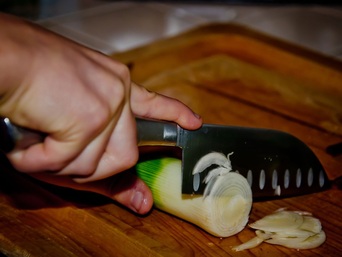
Boil and mash the sweet potatoes (optional: add butter and cream). Chop and saute leeks adding them to the mashers. Grate parm into mashers adding salt & pepper to taste. In a large sauce pan, saute whole garlic cloves adding crushed tomatoes. Add in chopped ends of the rainbow chard and parsley. Finish with sugar and salt & pepper to taste. Blanch the chard leaves then wrap them with a large serving spoon full of masher filling. Place in a large casserole dish stacked tight like enchiladas. Pour the tomato sauce over top. Grate mozzarella over top and sprinkle with pine nuts. Bake for 20-30 minutes @ 350°.          


Picture
I attended Nevada County's Sustainable Food & Farm Conference this past weekend in Grass Valley, CA and enjoyed an all-star line-up of keynote speakers...Temra Costa - author of Farmer Jane, Will Allen of Growing Power in Milwaukee, topped of with a little Joel Salatin of Polyface Farms, a.k.a. poster boy for sustainable farming practices...otherwise known as the farmer made famous in Michael Pollan's book, Omnivore's Dilemma and the Oscar nominated film, Food, Inc.

Getting to see Joel was just a warm-up for his upcoming lecture at Olympic Valley Lodge in Squaw Valley on Wednesday, February 13th; hosted by Squaw Valley Institute and in support of the Tahoe Food Hub and Slow Food Lake Tahoe. If you live nearby, reserve your tickets today at squawvalleyinstitute.org.

Knowing he was speaking to a choir of sustainable farmers and foodies, Joel handcrafted a new lecture on the fly for his audience of 300. I thought that was pretty thoughtful and it brought everyone to an even more alerted attention when he announced he had new material. He wanted to speak about people's "Fear of Success" and that people are actually less fearful of failure because so many people fail and "what's the harm in trying?" His request was for radical thinkers to take a chance on a passionate idea. As his Dad use to say, "We'll know more in 30-minutes that we do right now." In other words, you won't know if you'll succeed unless you try and trying is the fountain of youth.

Picture
Joel Salatin and his kids: Daniel and Sheri.
Joel outlined the FIVE R's of being an entrepreneur:
1. Risk...gotta be willing to take a chance
2. Renegade...be an original thinker
3. Reliant...reliant on oneself and not dependent
4. Ruckus...get rowdy and stir things up
5. Rigorous...its going to be hard work but stay focused and unwavering.

Putting the "FIVE R's" in the context of agriculture, Joel made it seem pretty cut and dry, "If you want to become a farmer...be a farmer." And proceeded to discuss the 5 WAYS TO SCALE-UP TO SUCCESS and "be a farmer."

1. How do I get land?...Joel expressed there is a lot of land out there and you don't need to necessarily own it encouraging aspiring farmers to approach landowners with farmable land which can be leased. And with 50% of the farmers about to retire, the market is about to become flooded with food producing acres so we need to connect young farmers with aging farmers.

2. Be a people person!...Being a farmer is a pastoral life but it doesn't mean necessarily an introverted, unsocial life. To be a successful farmer, you can't be afraid of people because growing food is about growing community and you need to cultivate the relationships with your neighbors just as much as your crops because they are your market.

3. Management...Not everyone is the best manager but to be successful, you can't be afraid to try. The only way to be successful is to become a manager so you can grow your business but also so you can have a "life" and do other things versus never leaving your farm because you have no one else to do it. Joel's suggestion, "Hire your first person right after you go crazy!" I think we all know what he's talking about there, haha!

4. Regulations!...With success comes regulations whether it be workmen's comp or grower certifications. They can seem daunting but resources are available to make it easier. Don't let regulations be an impediment to success because it's just another hurdle like learning to farm.

5. Business...You're in business to be successful so get set up for success. Have an action plan no matter how simple it is and strive for those goals.

From the mouth of Joel!